The CIA begins cultivating journalists
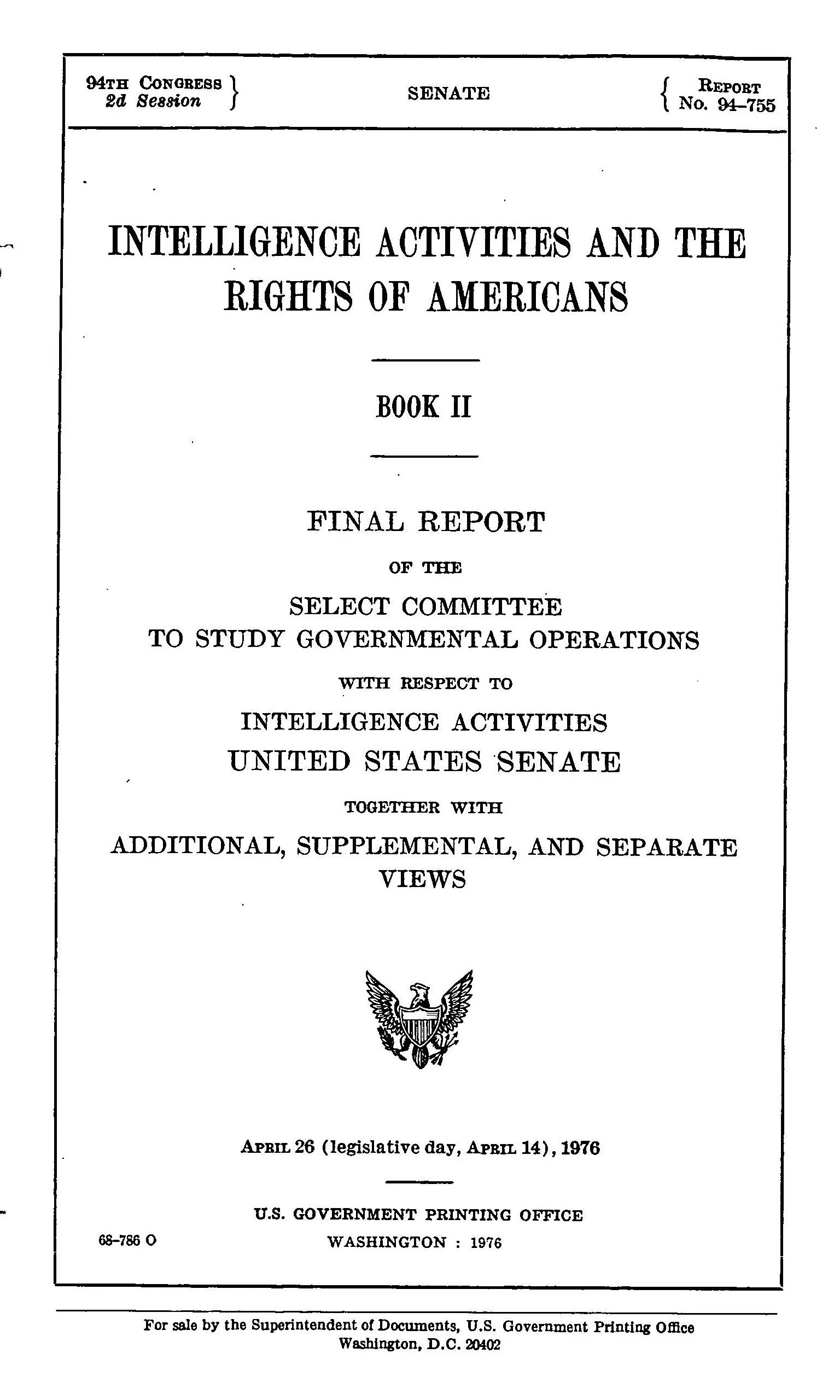
Frank Wisner, running political warfare for the early CIA, builds an apparatus of placed stories, funded fronts and recruited reporters. His own metaphor for it was "a mighty Wurlitzer" — a theatre organ that plays whatever tune is fed to it. Investigating in 1976, the Church Committee found the Agency held covert relationships with about fifty American journalists or employees of US media organisations: some officers working under journalistic cover, some reporters on regular contract, some receiving only occasional gifts and reimbursements. The committee did not publish their names. Carl Bernstein did, in Rolling Stone the following year, and his reporting is where the institutions enter the record: he named William Paley of CBS, Henry Luce of Time Inc., Arthur Hays Sulzberger of the New York Times, Barry Bingham Sr. of the Louisville Courier-Journal and James Copley of Copley News Service among executives who cooperated with the Agency, and put the programme’s reach at more than twenty-five newspapers and wire agencies.
A durable channel between an intelligence service and the outlets the public read to check on it. What it produced in any single case is mostly unknowable from the outside, which is the condition the arrangement creates and the reason it matters.
The entry was retitled in October 2026, because the old title asserted the contested part. The CIA’s cultivation of journalists is documented and the Senate figure of about fifty is the Church Committee’s own. The codename "Operation Mockingbird" is not: it first appears in Deborah Davis’s 1979 book Katharine the Great, with no source given, and no declassified charter matches the programme the name is usually attached to. The historian David P. Hadley states both halves — that the sweeping version "does not appear to be grounded in reality, but that should not disguise the active role the CIA played in influencing the domestic press’s output." Bernstein’s figure of more than four hundred is his reporting, not a Senate finding, and the two numbers are kept apart here rather than averaged — as are the named executives, which are his and not the committee’s. One correction to the correction, recorded because it is the more instructive mistake: the first pass at this entry deleted the named outlets outright on the grounds that the Senate never named them. That was over-correction. Bernstein did name them, he is cited here, and stripping sourced material is not the same as separating a finding from a reading. The names are restored with the attribution they always needed. What has gone is the claim of assets in "every major wire service", which overstates even Bernstein — his figure is more than twenty-five newspapers and wire agencies.
- Church Committee, Final Report, Book I (1976) · congressional
- Carl Bernstein, "The CIA and the Media", Rolling Stone (1977) · journalism
- Hugh Wilford, The Mighty Wurlitzer: How the CIA Played America, Harvard University Press (2008) · academic