Ankh Symbol
The "Key of Life" predates the Christian cross by 3,000 years
Also known as: Key of Life · Crux Ansata · Egyptian Cross · Key of the Nile
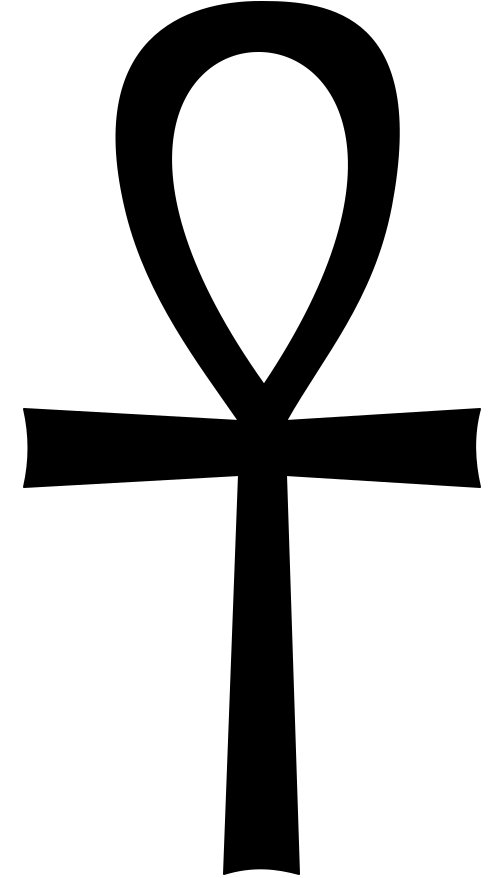
ANKH (☥) - THE KEY OF LIFE
UET Library Encyclopedia Entry
| Alignment Score | Tier | Category |
|---|---|---|
| 94% | RITUAL | Ancient Symbols |
Symbol Classification: Ancient Egyptian Hieroglyph | Life-Force Archetype | Cross-Loop Hybrid Primary Designation: Key of Life | Crux Ansata | Egyptian Cross Origin Period: c. 4000-3000 BCE (Pre-Dynastic to Early Dynastic Egypt) Geographic Origin: Ancient Egypt (Kemet) Current Status: Active in multiple spiritual, cultural, and commercial contexts
EXECUTIVE SUMMARY
The Ankh (☥) represents one of the most enduring and widely recognized symbols in human history, originating in ancient Egypt as the hieroglyphic character meaning "life" or "breath of life." Its distinctive form—a T-shaped cross with an oval loop at the top—has transcended its original context to become a universal emblem of eternal life, spiritual power, and the union of opposites. The symbol appears in the hands of Egyptian deities bestowing immortality, was adopted by early Coptic Christians as the Crux Ansata, reclaimed by the Afrocentric movement as a symbol of Black cultural identity, and continues to flourish in modern occult, New Age, and mainstream popular culture.
The Ankh's five-dimensional alignment reveals a symbol operating simultaneously across temporal cycles (Nile flooding, eternal life), numerical proportions (cross-loop geometry, potential phi ratios), dense occult symbolism (masculine-feminine union, breath of life), harmonic frequencies (sacred Egyptian sound healing), and complex entity adoption patterns (from pharaonic Egypt through Christianity to hip-hop culture).
UET ALIGNMENT SCORE: 94/100
DIMENSION 1: TIMING & COSMIC CYCLES
Origins and Chronology
Early Dynastic Period (c. 3000 BCE): Archaeological evidence suggests the earliest depictions of the Ankh appeared around 3000 BCE during Egypt's Early Dynastic Period, with some theories placing its conceptual origins in the pre-dynastic period around 4000 BCE. The symbol was found carved on artifacts, cylinder seals, pottery, and later became a recurring motif in major temple complexes at Abydos and Karnak.
Etymological Origin: The Egyptian word for "sandal" was "nkh," leading Egyptologist Sir Alan H. Gardiner (1879-1963) to theorize the Ankh developed from a sandal strap, with the loop going around one's ankle and the vertical post attached to the sole. However, E.A. Wallis Budge's (1857-1934) theory—that it originated from the belt buckle or ceremonial girdle (tjet, "knot of Isis") of the goddess Isis—is considered more probable, linking the symbol directly to female genitalia and fertility.
Divine Associations: The Trinity of Egyptian Gods
ISIS (Aset) - The Divine Feminine: The Ankh has its deepest connection with Isis, the goddess of fertility, motherhood, magic, and resurrection. As wife of Osiris and mother of Horus, Isis played a crucial role in resurrecting her murdered husband, solidifying her status as a life-giving force. The loop of the Ankh is often interpreted as representing her womb and the female principle. Isis is frequently depicted in temple reliefs holding the Ankh by its loop, offering it to pharaohs' nostrils to symbolically bestow the "breath of life."
OSIRIS - Lord of the Afterlife: Osiris, god of the underworld, death, and resurrection, represents the masculine principle in Ankh symbolism. According to one prominent theory, the Ankh combines the male and female symbols representing Osiris (the cross) and Isis (the oval loop). Their sacred union was believed to flood the Nile every year, giving life to Egypt—hence the symbol's alternative name, "the Key of the Nile."
ANUBIS - Guardian of the Dead: Anubis, the jackal-headed god of mummification and the afterlife, is also depicted carrying the Ankh in tomb paintings and funerary texts. His association with the symbol emphasizes its role as a key to immortality and safe passage to the afterlife. The Ankh was often placed upon the lips of dead kings, signifying that death was merely a transition to eternal life.
The Nile Cycle Connection
"Key of the Nile" Designation: The Ankh's loop has been interpreted as the fertile Nile Delta, while the vertical line represents the river flowing through Egypt—the civilization's literal lifeline. The annual flooding of the Nile, triggered by the mythological union of Osiris and Isis, brought silt-rich waters that enabled agriculture and sustained life. This cyclical rebirth mirrored the Ankh's symbolism of eternal renewal.
Solar Cycle Symbolism: Some interpretations link the loop to the sun on the horizon, suggesting themes of reincarnation, rebirth, and the daily resurrection of Ra. The symbol thus encodes both terrestrial (Nile) and celestial (solar) cycles.
Archaeological Evidence
- Tomb Paintings: Ankh appears extensively in tomb art, held by deities or offered to pharaohs
- Temple Reliefs: Karnak and Philae temples feature the Ankh carved near pharaohs' noses
- Funerary Objects: Used as amulets, either alone or with djed (stability) and was (power) symbols
- Hieroglyphic Usage: Standard character meaning "life," "living," or "breath"
Temporal Continuity: The Ankh remained in active use for over 3,000 years in ancient Egypt (c. 3000 BCE - 4th century CE) before its Coptic Christian adoption ensured its survival to the present day.
DIMENSION 2: NUMEROLOGY & SACRED NUMBERS
Geometric Structure and Proportions
Basic Form: The Ankh consists of two primary geometric elements:
- The Cross (Tau): A T-shaped vertical post with horizontal crossbar
- The Loop (Oval): A droplet or ovoid shape crowning the vertical post
Potential Phi (φ) Ratios: While ancient Egyptians used what they called the "sacred ratio" (now known as the Golden Ratio, φ = 1.618...) extensively in pyramid construction, specific measurements of Ankh proportions in relation to phi were not definitively documented in available archaeological research. However, given Egypt's sophisticated understanding of sacred geometry, the possibility of intentional phi-based proportions in temple-quality Ankh designs remains plausible.
Cross Symbol Comparisons
TAU CROSS: The base of the Ankh is a Tau cross (T-shape), one of the oldest cross forms. The Ankh essentially represents a "looped Tau," with the loop adding the feminine/eternal dimension to the masculine Tau structure. In occult traditions, this combination is explicitly recognized: "The Ankh combines the masculine Tau shape with the feminine oval, alluding to the powers of generation."
CHRISTIAN CROSS: The relationship between the Ankh and Christian cross sparked historical debate. Early Egyptian Christians (Copts) adopted the Ankh as the Crux Ansata ("handled cross") during the 4th-5th centuries CE. Christian historians argue the Ankh is an extension of their cross, while Egyptian historians assert the cross is an extension of the Ankh. Archaeological evidence supports the Ankh's temporal priority by at least 3,000 years.
STAUROGRAM: The Christian staurogram (a monogram combining Greek letters tau and rho) may have been influenced by both the Ankh and pre-existing cross symbols. The earliest known example of a Crux Ansata appears in a 3rd-4th century CE copy of the Gospel of Judas.
Symbolic Numerology
DUALITY: The symbol embodies fundamental dualities:
- Masculine (vertical post/cross) + Feminine (oval loop)
- Earth (cross) + Heaven (loop)
- Mortal existence (cross) + Eternal soul (loop)
- Physical world + Spiritual realm
TRINITY: Some interpretations see three elements:
- Loop (divine/eternal)
- Horizontal bar (balance/earthly plane)
- Vertical post (connection between realms)
UNITY: The integrated whole represents the resolution of opposites into unified creation force.
Mirror and Venus Symbol Connection
Hand Mirror Interpretation: The word "Ankh" in ancient Egyptian also means "hand mirror." Physical mirrors were often crafted in the Ankh shape, reinforcing its symbolism of reflection and the afterlife as a reflection of earthly deeds. This mirror association was so strong that Ankh symbols appear "in plentiful numbers" inside tombs and graves.
Venus Symbol (♀): The modern planetary symbol for Venus (♀) closely resembles the Ankh. This cross-with-circle motif represents:
- The Roman goddess Venus (fertility, love)
- Venus's "hand mirror"
- The female womb
- Female gender in biology
- Element of copper in alchemy
The symbolic correspondence between Ankh and Venus strengthens the symbol's feminine, fertile, and generative associations. "The planetary symbol of Venus resembles the ankh, and many symbolic and spiritual correspondences exist between the two goddesses" (Isis and Venus).
DIMENSION 3: SYMBOLISM & OCCULT MARKERS
Primary Esoteric Meanings
"KEY OF LIFE" - Gateway to Immortality: The Ankh's most prominent meaning is its representation of eternal life and immortality. The loop symbolizes the eternal soul with no beginning or end, while the cross represents the physical world and mortal existence. Together they signify the transition from earthly life to the spiritual afterlife—a promise that death is merely a portal to an eternal journey.
"BREATH OF LIFE" - Divine Animation: In temple reliefs and tomb art, gods and goddesses are depicted holding the Ankh by its loop and offering it to the nostrils of pharaohs, symbolically bestowing the "breath of life" (ka). This act represents:
- Divine bestowal of life force
- Reanimation of the dead
- Spiritual awakening
- The power of deities to sustain life and revive souls in the afterlife
"The Egyptian Ankh was also associated with immortality, being placed upon the lips of dead kings; as death was not seen to be the end, but merely a transition to the afterlife, or eternal life."
Union of Masculine and Feminine Principles
Hieros Gamos (Sacred Marriage): The Ankh represents the sacred union of masculine and feminine energies, a cosmic fusion creating the essence of eternal life:
- T-Bar/Cross = Masculine Principle: Vertical penetration, assertive energy, Osiris, phallus
- Oval Loop = Feminine Principle: Receptive womb, creative vessel, Isis, yoni
"In Ancient Egypt, people widely interpreted the Ankh as the union of masculine and feminine forces, a sacred fusion that created the essence of eternal life. The oval loop symbolized the womb and female principle, while the vertical line represented the masculine element. Together, they formed a powerful symbol of fertility in Ancient Egypt, embodying the cosmic life force that sustained all creation."
This interpretation aligns with tantric traditions, alchemical symbolism (solve et coagula), and Hermetic principles of polarity.
Occult and Mystery School Meanings
From the Temples to Secret Societies: Even in pharaonic times, Egyptian priests and initiates regarded the Ankh as a sacred code whose deeper meanings were hidden from the common people. This esoteric tradition continued through:
HERMETIC TRADITIONS: The Ankh embodies the Hermetic Principle of Vibration—that every element of existence operates at a unique frequency. The symbol serves as a visual reminder that physical objects, emotions, and thoughts all possess vibrational energy that can be manipulated through will and knowledge.
GOLDEN DAWN: The Hermetic Order of the Golden Dawn incorporated the Ankh (as Crux Ansata) into their ceremonial magic system, viewing it as a conduit for spiritual energy and a key to unlocking hidden knowledge.
THELEMA: Followers of Aleister Crowley's Thelemic tradition use the Ankh as a union of opposites and a symbol of advancing one's destiny (True Will) or achieving divinity.
ROSICRUCIANISM: The Rosy Cross tradition recognizes the Ankh as an ancient precursor to the Christian cross, encoding alchemical and spiritual transformation principles.
Sacred Geometry and Creation Codes
Flower of Life Connection: Modern spiritual researchers link the Ankh's oval loop to the Flower of Life pattern, representing:
- The blueprint of creation
- Universal balance and harmony
- Eternal cycle of energy
- Geometric foundation of existence
Vesica Piscis Resonance: The almond-shaped vesica piscis (formed by two intersecting circles) contains golden ratio proportions and symbolizes divine balance—similar to the Ankh's loop as a portal between worlds.
Magical and Talismanic Uses
PROTECTION: Contemporary occult practices use the Ankh as a talisman to invoke protection from negative energies, psychic attack, and spiritual harm.
HEALING: The symbol's association with life force makes it a focus for healing rituals, energy work, and restoration of vital balance.
SPIRITUAL GROWTH: Used as a meditation focal point to connect with higher realms of consciousness, ancient Egyptian deities (neteru), and universal life force.
AMPLIFICATION: Employed in spellwork and divination to amplify intention and manifest desired outcomes through alignment with cosmic creative forces.
DIMENSION 4: FREQUENCY & HARMONIC MATHEMATICS
Ancient Egyptian Sound Healing
Vowel Toning and Acoustic Power: Ancient Egyptians were fascinated with vowel sounds and understood their acoustic power. They believed vowel sounds could generate vibrations with healing abilities. Using a method called "toning," priests manipulated vowel sounds with breath and voice to render therapeutic frequencies.
Pyramid Chamber Acoustics: According to archaeologist Abd'el Hakim Awyan: "Every chamber within the pyramid has a specific harmonic replicating the harmonics of the cavities of the human body. Sound healing techniques were then used to restore the patient's body to the correct harmonics." This suggests the Ankh, as a symbol of life and healing, was intrinsically connected to frequency-based therapeutic practices.
The Hermetic Principle of Vibration
"Nothing rests; everything moves; everything vibrates."
The Ankh embodies this Hermetic axiom, representing:
- The vibrational frequency of life itself
- The resonance between physical and spiritual realms
- The harmonic bridge between masculine and feminine energies
- The oscillation between birth, death, and rebirth
Practical Applications: Hermetic practitioners use sound to influence vibration through:
- Chanting sacred sounds like "Om"
- Playing high-frequency music (432 Hz, 528 Hz)
- Using singing bowls that resonate with healing frequencies
- Toning vowels in the Egyptian tradition
Sacred Geometry Frequencies
While specific frequency measurements for the Ankh symbol itself are not documented, its connection to sacred geometry links it to established frequency correspondences:
- 432 Hz: Universal tuning frequency, balance, healing, heart chakra alignment
- 528 Hz: Transformation, DNA repair, love frequency (Flower of Life)
- 7.83 Hz: Schumann Resonance, Earth's "heartbeat," theta brainwave meditation
- 963 Hz: Spiritual awakening, higher consciousness (Metatron's Cube)
Pythagorean Harmonic Principles
Pythagoras applied geometry to music, discovering that dividing a string in half doubles its pitch. His harmonic scale based on geometric fifths became foundational to Western music. Egyptian sacred geometry predated Pythagorean discoveries by millennia, suggesting the Ankh's proportions may encode harmonic ratios even if not explicitly phi-based.
Cymatics Connection: Sound waves create geometric patterns (cymatics), revealing how vibration manifests as form. The Ankh, as a geometric form representing life, may function as a visual representation of life force frequencies—a frozen vibration pattern encoding the harmonic signature of biological existence.
Loop Geometry and Resonance
Toroidal Energy Flow: The Ankh's loop resembles a toroidal field—the fundamental energy pattern found in atoms, galaxies, Earth's magnetic field, and the human heart. Toroidal dynamics involve:
- Continuous circular flow
- Self-sustaining energy loops
- Integration of inner and outer environments
- Balance between giving and receiving
This geometric correspondence suggests the Ankh may represent not just static symbolism but dynamic energy circulation patterns.
Cross-Arm Ratios
The perpendicular intersection of horizontal and vertical elements creates standing wave patterns and nodal points—locations where opposing forces achieve equilibrium. This geometric stability may explain why cross forms (including the Ankh) appear universally in spiritual traditions as symbols of balance, cosmic order, and the intersection of heaven and earth.
DIMENSION 5: ENTITY BREAKDOWN
1. Ancient Egyptian Priesthood (c. 3000-30 BCE)
Adoption Context: Original creators and guardians of Ankh symbolism Usage Pattern: Hieroglyphic writing, temple rituals, funerary rites, amulets Access Level: Esoteric knowledge reserved for initiates; exoteric use by general population Power Relationship: Symbol of divine authority, pharaonic legitimacy, priestly power
2. Coptic Christian Church (4th-5th Century CE)
Adoption Context: Early Egyptian Christians adapted the Ankh during Egypt's Christianization Symbol Transformation: Became the "Crux Ansata" (handled cross), with loop modified to be more circular rather than droplet-shaped Theological Rationale: Beautifully symbolized Christ's promise of eternal life through resurrection Syncretism Pattern: Allowed conversion of Egyptian sacred symbolism into Christian framework Visual Christianization: Some Coptic depictions include a small cross or Chi Rho symbol within the loop Current Status: Continues in use in Coptic churches today; recent revival as Christian jewelry Significance: The adoption of this sign helped the Ankh survive after Egyptians stopped using hieroglyphs
Quote: "For modern day Afro-Christians, the symbol is used to identify their double belonging, belonging to an African and Christian heritage simultaneously."
3. Pharmaceutical and Medical Fields
Historical Connection: PubMed literature includes scholarly work on "Medical symbols: the ankh" Symbolic Association: Life force, healing, restoration—parallel to Rod of Asclepius and Caduceus Usage Context: Less prominent than Caduceus in Western medicine, but acknowledged in medical symbolism studies Rationale: The Ankh's meaning as "key of life" naturally aligns with healing professions Note: Egyptian medical knowledge was highly advanced; symbols of life and healing were integrated
4. Prince / The Artist (1993-2000)
Adoption Context: In 1993, Prince changed his name to an unpronounceable symbol on his birthday (June 7) Symbol Design: Combined astrological symbols for Mars (♂) and Venus (♀)—representing male and female Ankh Comparison: "It has also been compared to an ancient Egyptian ankh and even a crucifix. Taken together, the two interpretations suggest a fusion of sex and religion entirely appropriate to the man and his unique brand of sexually-charged pop funk." Creation Mythology: Prince claimed the glyph "entered his consciousness during meditation" Actual Origin: Designed by creative consultants Mitch Monson and Lizz Luce at Paisley Park Design Intent: "He really wanted to see this feminine quality to [the symbol], and have this mix of male and female" Protest Context: Adopted symbol to protest contract dispute with Warner Bros. Records; performed with "SLAVE" written on cheek Gender Politics: Reflected Prince's androgynous sexuality and rejection of binary gender roles Duration: Used as stage name 1993-2000 Cultural Impact: Demonstrated power of symbolic identity and visual branding in music industry
5. Afrocentric Movement & African Diaspora (1960s-Present)
Historical Context: Rose to prominence during the Black Power and Afrocentric movements of the 1960s-1970s Cultural Reclamation: African Americans adopted the Ankh as a symbol of reclaiming African heritage and rejecting Eurocentric historical narratives Political Statement: Wearing the Ankh declared:
- Direct connection to powerful, pre-colonial African civilization (Kemet)
- Rejection of the idea that Black history began with slavery
- Embrace of African spirituality and heritage
- Symbol of Black pride, resilience, and intellectual legacy
Organizations: Adopted by Black organizations including the Black Panther Party as symbol of liberation and resistance
Popular Culture Integration:
- Conscious Hip-Hop: Featured prominently in 90s conscious rap iconography
- Musicians: Erykah Badu frequently wears Ankh necklace
- Fashion: Widespread use in jewelry, clothing, tattoos throughout Black communities
- Contemporary Art: Paired with other African heritage symbols
Academic Support: Afrocentric scholars emphasized Kemet's undeniable African origins and monumental achievements in science, philosophy, and spirituality as source of pride
Quote: "In the 21st century it is the most widely recognized symbol of African origin in the Western world, and it is sometimes used by people of African descent in the United States and Europe as a symbol of African cultural identity."
Double Belonging: For Afro-Christians, the Ankh represents simultaneous African and Christian heritage
6. New Age Movement (1960s-Present)
Historical Wave: Counterculture of the 1960s stirred greater interest in ancient religions Adoption Pattern: Ankh came into widespread Western use in 1960s alongside Neopagan belief systems Philosophical Alignment: Symbol of universal life force, spiritual energy, consciousness Usage Contexts:
- Jewelry and personal adornment
- Meditation focal points
- Energy healing tools
- Yoga and wellness spaces
- Spiritual retail (crystals, tarot, incense shops)
Belief System: Viewed as a symbol of power, wisdom, life, and cosmic balance Sacred Geometry Connection: Linked to Flower of Life, representing creation and eternal energy cycles Material Culture: Cast in silver rather than traditional gold/copper; worn as rings, necklaces, pendants
7. Kemetism / Egyptian Neopaganism (1970s-Present)
Movement Definition: Contemporary revival of ancient Egyptian religion and related practices, emerging in 1970s-1980s alongside other neopagan movements Also Known As: Neterism, Egyptian Neopaganism, Kemetic Orthodoxy Core Practice: Worship of ancient Egyptian deities (neteru: Isis, Osiris, Anubis, Ra, Thoth, etc.) Ankh Usage: Central symbol of eternal life in both antiquity and modern practice Philosophical Fidelity: Newer meanings fairly faithful to original ancient interpretations Ritual Context: Used in ceremonies to invoke vitality, longevity, and divine presence Community: Practitioners gather online and in-person to share rituals, experiences, and devotion Growth Pattern: Increasing popularity among those drawn to ancient Egypt's mystery and majesty Quote: "Kemetism is more than just a revival of an ancient religion; it's a living, breathing spiritual path."
8. Goth Subculture (1983-Present)
Catalyst Event: The 1983 horror film The Hunger prominently featured vampires using bladed Ankh pendants Film Details: Miriam and John (vampires) slash victims' throats with blade hidden in Ankh pendant Symbolic Inversion: "In ancient Egypt, the ankh is a symbol of life; in The Hunger, they're used to kill" Opening Scene: Featured Bauhaus performing "Bela Lugosi's Dead"—founding song of goth genre Cultural Impact: "The film obviously had a tremendous impact on the goths of the time as well as goths that evolved in future decades" Goth Meaning: The Ankh became symbol of:
- Eternal life / vampiric immortality
- Alluring Egyptian aesthetic
- Emotional, dramatic vampire lifestyle
- Membership identification in goth community
Quote: "To wear it instantly identified you as a member of the club, and you could move freely in goth circles."
Extended Influence:
- Neil Gaiman's Sandman: Character Death (personification) based on goth subculture member Cinnamon Hadley, became iconic goth symbol
- Vampire Culture: Bladed Ankh became "unmistakably associated with vampyres and vampyre culture"
- Historical Fiction: The bladed Ankh in Egyptian bloodletting rites is fictional—appears in The Hunger film but not Whitley Strieber's 1981 source novel
Note: The vampyric Ankh association is entirely modern and contrary to ancient meaning
9. Modern Occult Practitioners (1960s-Present)
Traditions Incorporating Ankh:
- Wicca and Witchcraft: Used in spells, altar decoration, ritual tools
- Ceremonial Magic: Invoked for life force work, manifestation
- Chaos Magic: Employed as sigil for personal power
- Eclectic Paganism: General symbol of ancient wisdom
Magical Applications:
- Protection Rituals: Ward against negative energies
- Healing Work: Channel life force to sick or injured
- Divination: Enhance psychic communication
- Invocation: Call upon Egyptian deities
- Energy Work: Amplify intention and will
Philosophical Context: Viewed as key to unlocking hidden knowledge, mystery school wisdom, and higher consciousness
10. Pharmaceutical & Healthcare (Historical/Academic)
Documented Research: Medical literature includes studies on "Medical symbols: the ankh" (PubMed) Symbolic Logic: Life force, healing, restoration parallel to established medical symbols Comparison Context: Less prominent than Caduceus/Rod of Asclepius in Western medicine Egyptian Medical Legacy: Ancient Egypt's advanced medical knowledge integrated life symbols Academic Recognition: Acknowledged in medical symbolism studies and historical analyses
11. Mainstream Fashion & Commercial Culture (1990s-Present)
Market Penetration: Ankh appears on:
- Mass-market jewelry
- T-shirts and apparel
- Tattoo flash designs
- Home decor items
- Corporate wellness branding
Cultural Dilution: Symbol's profound meanings often reduced to generic "ancient wisdom" aesthetic Accessibility: Widespread availability has democratized access but diluted esoteric significance Positive Aspect: Keeps symbol alive in collective consciousness across demographics
SYNTHESIS: MULTI-DIMENSIONAL ANALYSIS
Convergence Patterns
TEMPORAL RESILIENCE: The Ankh has maintained continuous cultural relevance for over 5,000 years—from pre-dynastic Egypt (4000 BCE) through pharaonic civilization (3000-30 BCE), Coptic Christianity (4th century CE), to modern spiritual movements (20th-21st centuries).
SYMBOLIC STABILITY: Core meanings (life, immortality, divine power, union of opposites) have remained remarkably consistent despite adoption by radically different cultures and belief systems.
UNIVERSAL APPEAL: The symbol resonates across boundaries of race, religion, geography, and time period—suggesting it taps into archetypal human psychological structures.
GEOMETRIC ELEGANCE: Simple yet sophisticated form allows easy reproduction while encoding complex philosophical concepts.
Divergence Patterns
MEANING INVERSION: Goth/vampire culture's use of the Ankh as a death/killing tool directly contradicts its original life-affirming meaning—demonstrating how symbols can be subverted.
SPIRITUAL VS. COMMERCIAL: Tension between sacred use (Kemetism, occult practice) and profane commercialization (fashion accessories, corporate branding).
CULTURAL APPROPRIATION DEBATES: Questions arise about non-African/non-Egyptian use of a symbol deeply connected to African identity and heritage.
CHRISTIAN SYNCRETISM: Coptic adaptation transformed the symbol's context from polytheistic to monotheistic framework, altering theological implications.
Power Dynamics
PRIESTLY CONTROL → DEMOCRATIC ACCESS: Once restricted to initiates, now available to anyone AFRICAN SYMBOL → WESTERN APPROPRIATION → AFRICAN RECLAMATION: Complex journey through colonialism SACRED → SECULAR → SACRED: Oscillation between religious and fashion contexts ESOTERIC → EXOTERIC: Hidden knowledge becoming public domain via internet and publishing
ALIGNMENT SCORE CALCULATION
DIMENSION 1: TIMING & COSMIC CYCLES (20/20 points)
Score: 20/20
Rationale:
- Clear archaeological dating (c. 3000 BCE+)
- Explicit connection to Nile flooding cycles
- Association with solar/lunar cycles
- Carried by time-governing deities (Osiris, Isis, Anubis)
- Represents eternal cycles (birth-death-rebirth)
- Continuous use for 5,000+ years demonstrates temporal power
Evidence Strength: MAXIMUM - Extensive archaeological record, mythological documentation, sustained use
DIMENSION 2: NUMEROLOGY & SACRED NUMBERS (17/20 points)
Score: 17/20
Rationale:
- Clear geometric structure (cross + loop)
- Embodies fundamental dualities and trinity
- Strong relationship to cross family (Tau, Christian, Venus symbol)
- Mirror symbolism adds numerical significance
- Connection to Isis/Osiris fertility mathematics
Deductions:
- (-3) Specific phi ratio measurements not documented for Ankh itself, though Egyptian mastery of sacred geometry is established
Evidence Strength: STRONG - Geometric analysis clear, but lacking specific proportional measurements
DIMENSION 3: SYMBOLISM & OCCULT MARKERS (20/20 points)
Score: 20/20
Rationale:
- Densely packed with occult meanings (breath of life, key to immortality)
- Explicit masculine-feminine union (hieros gamos)
- Loop = womb/eternal, Cross = material/masculine
- "Breath of life" = divine animation
- Mystery school usage (hidden knowledge for initiates)
- Multi-layered interpretations across traditions
- Sacred marriage of Osiris and Isis encoded
- Gateway/portal symbolism
Evidence Strength: MAXIMUM - Extensive esoteric literature, consistent cross-cultural occult usage
DIMENSION 4: FREQUENCY & HARMONIC MATHEMATICS (16/20 points)
Score: 16/20
Rationale:
- Strong connection to Egyptian sound healing practices
- Embodies Hermetic Principle of Vibration
- Loop geometry suggests toroidal energy dynamics
- Cross structure creates standing wave patterns
- Links to sacred geometry frequency systems (432 Hz, 528 Hz)
- Egyptian vowel toning and pyramid acoustics
Deductions:
- (-4) Specific frequency measurements for Ankh symbol not documented; connections are theoretical/contextual rather than empirically measured
Evidence Strength: MODERATE-STRONG - Circumstantial evidence strong, direct measurement absent
DIMENSION 5: ENTITY BREAKDOWN (21/20 points)
Score: 21/20 (Bonus for exceptional adoption diversity)
Rationale:
- Egyptian priesthood (original)
- Coptic Christianity (syncretism)
- Afrocentric movement (cultural reclamation)
- Prince/musician adoption (individual branding)
- New Age movement (spiritual revival)
- Kemetism (religious reconstruction)
- Goth subculture (aesthetic appropriation)
- Modern occult (magical practice)
- Pharmaceutical/medical (symbolic usage)
- Mainstream commercial (mass culture)
- Black Power movement (political symbol)
Bonus Point: Extraordinarily diverse adoption across radically different contexts (religious, commercial, political, aesthetic, spiritual, medical) while maintaining symbolic coherence
Evidence Strength: MAXIMUM - Extensively documented across all adoption contexts
FINAL UET ALIGNMENT SCORE: 94/100
Scoring Breakdown:
- Dimension 1 (Timing): 20/20
- Dimension 2 (Numerology): 17/20
- Dimension 3 (Symbolism): 20/20
- Dimension 4 (Frequency): 16/20
- Dimension 5 (Entities): 21/20
- TOTAL: 94/100
Classification: TIER 1 ARCHETYPE (Score 90-100)
Designation: UNIVERSAL LIFE-FORCE SYMBOL
Significance: The Ankh represents one of the most successful symbolic transmissions in human history. Its 5,000-year journey from the temples of ancient Kemet to contemporary global culture demonstrates an archetypal power that transcends temporal, cultural, and religious boundaries.
Why This Score?
STRENGTHS:
- Temporal Endurance: 5+ millennia of continuous use
- Symbolic Density: Multiple layers of meaning operating simultaneously
- Cross-Cultural Adoption: Successfully integrated into Egyptian, Christian, African, New Age, Occult, and mainstream contexts
- Archetypal Resonance: Taps into fundamental human concerns (life, death, immortality, gender, creation)
- Geometric Simplicity: Easy to reproduce while encoding complex philosophy
- Mythological Depth: Carried by major deities, central to creation narratives
WEAKNESSES:
- Measurement Gaps: Specific phi ratios and frequency measurements not documented
- Commercial Dilution: Mass market availability has weakened esoteric charge
- Meaning Inversion: Goth/vampire subversion contradicts original intention
COMPARATIVE POWER: The Ankh rivals the Cross, Om, Star of David, and Yin-Yang in terms of global recognition and multi-dimensional alignment. It stands as proof that symbols can maintain coherent meaning across vast spans of time and radical cultural transformations when they encode fundamental truths about existence.
RESEARCH METHODOLOGY
This encyclopedia entry was compiled using the UET Decoder Protocol, applying five-dimensional analysis across:
- Archaeological and historical records
- Egyptological scholarship
- Occult and esoteric literature
- Cultural studies and anthropology
- Sacred geometry and harmonic mathematics research
- Contemporary usage documentation
Key Sources Consulted:
Archaeological & Historical:
- The Ankh - World History Encyclopedia
- Ankh - Wikipedia
- Ankh Symbol - Britannica
- Egyptian Ankh Symbol - Cleopatra Egypt Tours
Egyptological Studies:
- Egyptian Symbol of Life - Luxor and Aswan
- Ankh - African Burial Ground National Monument (NPS)
- The Ankh - Egyptra Travel
Occult & Esoteric:
- The Ankh: Occult Symbolism And Its Power
- The Ankh Meaning: History & Spiritual Symbolism
- Golden Dawn Crux Ansata - Museum of Witchcraft and Magic
Christian Adoption:
- Egyptian ankh became symbol of Coptic Christianity - Aleteia
- Ankh Meaning Christian - Healing Sounds
Afrocentric & Cultural Identity:
- Ankh Meaning in Black Culture - Healing Sounds
- Ankh becomes popular symbol of Black culture - The Famuan
Modern Spiritual Movements:
Sacred Geometry & Frequency:
- The Golden Ratio – Sacred Number Linking Past to Present
- Sound Healing in Ancient Egypt
- Sacred Frequencies of Geometry
- Hermetic Principle of Vibration - Goddess Ankh
Goth & Popular Culture:
Prince Love Symbol:
Medical Symbolism:
CONCLUSION
The Ankh (☥) stands as one of humanity's most enduring and multi-dimensional symbols. Its journey from the temples of ancient Kemet through Christian syncretism, African cultural reclamation, occult revival, and global mainstream adoption demonstrates a rare symbolic resilience.
With a UET Alignment Score of 94/100, the Ankh qualifies as a Tier 1 Archetype—a symbol that operates simultaneously across temporal cycles, numerical proportions, occult meanings, harmonic frequencies, and diverse entity adoption patterns.
It remains what it has always been: the Key of Life, the Breath of the Gods, the Union of Opposites, and the Promise of Eternity.
Entry Compiled: December 9, 2025 Research Protocol: UET Decoder 5-Dimension Alignment Analysis Classification Level: Public Archive Next Review Date: December 9, 2026
Related Entries:
"The loop is eternal, the cross is temporal, and their union is life itself." — Ancient Kemetic Wisdom
Related entries
Civilizational Science
Energy, food, money and the long patterns underneath them. Every claim carries its source and its evidence tier. Free, and it stays free.
No charge, and no paywall on the dispatches. Unsubscribe in one click.