Eye of Horus
Often confused with the dollar bill eye. The original is 5,000 years older.
Also known as: Wadjet · Wedjat · Udjat · Eye of Ra · All-Seeing Eye · Egyptian Eye
EYE OF HORUS (WADJET/UDJAT)
UET Library Encyclopedia Entry
Symbol Classification: Ancient Egyptian Sacred Protection Symbol
| Alignment Score | Tier | Category |
|---|---|---|
| 91.6% | RITUAL | Ancient Symbols |
EXECUTIVE SUMMARY
The Eye of Horus (Wadjet/Udjat) stands as one of humanity's most enduring and mathematically sophisticated symbols, originating in ancient Egypt circa 3000 BCE. This powerful emblem represents protection, healing, restoration, and cosmic wholeness, while encoding a remarkable mathematical system based on binary fractions. The symbol has transcended millennia to appear in modern corporate logos, medical symbolism, occult traditions, and conspiracy theories, making it a prime subject for UET Decoder Protocol analysis.
Key Identifiers:
- Ancient Names: Wadjet, Wedjat, Udjat (meaning "whole" or "healthy")
- Era: Predynastic Egypt (before 3200 BCE) through present day
- Primary Meanings: Protection, healing, restoration, royal power, divine oversight
- Mathematical Encoding: Binary fractions (1/2, 1/4, 1/8, 1/16, 1/32, 1/64)
- Missing Element: 1/64 = "Thoth's Magic" (representing divine completion)
UET DECODER PROTOCOL ANALYSIS
1. TIMING & COSMIC CYCLES (Score: 95/100)
Origins and Historical Timeline
The Eye of Horus emerged from Predynastic Egypt (before 3200 BCE), making it one of the oldest continuously recognized symbols in human history. Horus himself was already worshiped in this period as a sky god, god of kings, and solar deity. The Pyramid Texts (c. 2686-2181 BCE) from the late Old Kingdom provide the earliest written sources for the mythology.
Key Temporal Markers:
- Pre-3200 BCE: Wadjet worshiped as cobra goddess of Lower Egypt
- c. 3100 BCE: Unification of Egypt; Wadjet becomes royal protector symbol
- c. 2686-2181 BCE: Pyramid Texts codify Horus-Set mythology
- c. 1550-1070 BCE: New Kingdom period distinguishes lunar/solar eye duality
- 1951 CE: CBS adopts eye symbol for corporate logo
- 1990s-2000s: New Age revival and conspiracy theory proliferation
- 2025: Symbol remains ubiquitous in spirituality, medicine, and popular culture
Mythological Cycle: The Waxing and Waning Moon
The Eye of Horus mythology directly mirrors the lunar cycle. According to the myth, Set tore out Horus's left eye and shattered it into six pieces during their battle for the throne of Egypt. The god Thoth (associated with the moon, wisdom, and magic) reassembled the eye and restored it to wholeness.
Cosmic Timing Significance:
- The destruction and restoration cycle symbolizes the monthly lunar phases
- New moon = eye torn out/destroyed
- Full moon = eye completely restored to wholeness
- The 29.5-day lunar cycle mirrors transformation and healing
- This connects to Egyptian concepts of Ma'at (cosmic order restored from chaos)
Solar Connection: Right Eye = Ra
While the left eye represents lunar cycles, the right eye of Horus became associated with the sun god Ra, creating a duality:
- Right Eye: Solar, masculine, active, Ra's divine fire
- Left Eye: Lunar, feminine, receptive, healing energy
Some Egyptologists argue this solar/lunar distinction wasn't clearly articulated until the New Kingdom period (1550-1070 BCE), though the sky god Horus was always understood to have celestial eyes.
Temporal Alignment Assessment
The Eye of Horus demonstrates exceptional temporal coherence:
- Direct correlation to observable astronomical cycles (lunar phases)
- Mythological timing embedded in natural phenomena
- Continuous cultural transmission across 5,000+ years
- Modern revival synchronized with Age of Aquarius consciousness movement
Timing & Cosmic Cycles Score: 95/100
2. NUMEROLOGY & SACRED NUMBERS (Score: 98/100)
The Eye of Horus contains perhaps the most sophisticated mathematical encoding in ancient symbolism—a binary fractional system that predates modern binary computing by millennia.
The Six Sacred Fractions
Each of the six anatomical parts of the Eye corresponds to a unit fraction with powers of 2 in the denominator:
| Eye Component | Fraction | Sensory Association | Brain Correspondence |
|---|---|---|---|
| Right side (nose) | 1/2 | Smell | Olfactory region |
| Pupil (center) | 1/4 | Sight | Pineal gland/thalamus |
| Eyebrow (top) | 1/8 | Thought | Corpus callosum |
| Left side (ear) | 1/16 | Hearing | Auditory cortex |
| Curved tail | 1/32 | Taste | Gustatory pathway |
| Teardrop (bottom) | 1/64 | Touch | Somatosensory pathway |
The Heqat Measurement System
These fractions were used practically in ancient Egypt as capacity system submultiples for measuring grain (heqat units), ingredients for medicines, and pigments. Modern scholarship (Jim Ritter, 2002) has shown these originated in hieratic (cursive) texts for practical commerce, though they were later mythologized and connected to the Eye symbol.
The Mystical Sum: 63/64
When you sum the six fractions:
1/2 + 1/4 + 1/8 + 1/16 + 1/32 + 1/64 = 63/64
The symbol deliberately falls 1/64 short of unity—a profound mathematical and philosophical statement.
The Missing 1/64: Thoth's Magic
Multiple interpretations exist for the missing sixty-fourth:
- Divine Magic: Thoth supplied the missing piece through supernatural means
- Human Imperfection: Mortals cannot achieve the perfection of the gods (only 63/64)
- Spiritual Power: The invisible 1/64 represents the intangible force underlying existence
- Infinite Approach: A geometric series that converges toward 1 but never reaches absolute wholeness
From a modern mathematical perspective, this is the first six terms of a geometric series (1/2^n) whose infinite sum converges to exactly 1. The Egyptians may have intuited this convergence principle.
Binary System Precursor
The Eye of Horus fractions represent a proto-binary system:
- All denominators are powers of 2 (2^1, 2^2, 2^3, 2^4, 2^5, 2^6)
- This is the foundation of modern digital computing
- Ancient Egyptians used halving and doubling extensively in calculations
- The fractional system allowed for rapid mental arithmetic
Numerological Symbolism
Number 6: The six parts represent wholeness through sensory perception (five senses + thought/consciousness)
Number 63: Multiples of sacred 9 (9 × 7), associated with completion cycles
Number 64: A perfect square (8²) and a power of 2 (2^6), symbolizing perfect completion
Powers of 2: Fundamental to creation myths (doubling, mirroring, replication)
Numerology & Sacred Numbers Score: 98/100
3. SYMBOLISM & OCCULT MARKERS (Score: 92/100)
The Eye of Horus is rich with layered symbolic meaning, making it a cornerstone of Western esoteric tradition.
Primary Ancient Egyptian Meanings
Protection (Foremost):
- Worn as an amulet by living and dead
- Painted on ships by sailors for safe voyages
- Inscribed on buildings and tombs
- The Uraeus (cobra) on pharaoh's crown represents Wadjet's protective strike
Healing and Restoration:
- The restored eye symbolizes recovery from injury
- Used in medical contexts and healing rituals
- Thoth's reassembly represents medical intervention
- Connection to the modern medical "Rx" symbol (debated)
Royal Power:
- Horus offered his restored eye to resurrect his father Osiris
- Pharaohs claimed descent from Horus
- Symbol of legitimate divine kingship
Cosmic Order (Ma'at):
- Restoration of the eye = restoration of cosmic balance
- Chaos (Set's violence) overcome by order (Thoth's wisdom)
The Original "All-Seeing Eye"
The Eye of Horus is frequently called the original all-seeing eye, predating similar symbols by millennia:
- Egyptian Context: Divine oversight, protective surveillance, omniscient wisdom
- Modern Confusion: Often conflated with the Eye of Providence (US dollar pyramid eye)
- Key Difference: The Eye of Horus is specifically Egyptian; the Eye of Providence emerged from Christian/Masonic traditions in the 17th-18th centuries
Duality: Left Eye vs. Right Eye
Left Eye (Eye of Horus proper):
- Celestial Body: Moon
- Deity: Thoth (god of wisdom, magic, writing)
- Energy: Feminine, receptive, intuitive
- Function: Healing, restoration, spiritual vision
- Process: Waxing and waning (transformation)
Right Eye (Eye of Ra):
- Celestial Body: Sun
- Deity: Ra (sun god, king of gods)
- Energy: Masculine, active, fierce
- Function: Power, wrath, divine retribution
- Manifestation: Sekhmet (lioness goddess of war)
Egyptologist Richard H. Wilkinson suggests these distinctions solidified gradually over Egyptian history, with clearer differentiation by the New Kingdom period.
Occult and Esoteric Adoption
Modern Occult Usage:
- Thelema: Aleister Crowley and followers consider 1904 the start of the "Age of Horus"
- Golden Dawn: Symbol of spiritual awakening and initiation
- New Age Movement: Third eye activation, pineal gland decalcification
- Chaos Magic: Sigil work and protective talismans
Freemasonry Connection (Debunked): Despite popular belief, the Eye of Horus is not originally a Masonic symbol. The Masonic "All-Seeing Eye" (Eye of Providence) was adopted around 1797 with Thomas Smith Webb's The Freemason's Monitor, long after the Great Seal of the United States (1782) featured a similar eye. The Masonic eye represents the "Great Architect of the Universe" (God), not Egyptian deities.
CBS Television Logo (1951)
Official Origin: Designer William Golden based the CBS eye on Pennsylvania Dutch hex symbols painted on Shaker barns to ward off evil spirits. He saw these protective "evil eye" symbols in a 1950 article in Portfolio magazine.
Symbolism: The network claimed the eye represented "CBS looking at the world"—omnipresent media surveillance.
Occult Speculation: Some conspiracy theorists connect the CBS eye to the Eye of Horus or Illuminati symbolism, but no documented evidence supports this. The actual inspiration was American folk art, not Egyptian mysticism.
US Dollar "All-Seeing Eye" Comparison
On the Great Seal (1782):
- Eye of Providence atop an unfinished pyramid
- Represents God's benevolent oversight of the new nation
- Proposed by Pierre Eugene du Simitiere, inspired by biblical descriptions of divine gaze (Psalms, Ecclesiastes)
- No Masonic or Egyptian influence: Benjamin Franklin (only Freemason on design committee) had none of his suggestions adopted
Confused with Eye of Horus: The dollar eye and Egyptian eye share themes of divine watchfulness, but are historically and symbolically distinct.
Medical "Rx" Symbol Origin (Debated)
Multiple theories exist for the pharmaceutical prescription symbol "℞":
Theory 1: Latin "Recipe" (Most Accepted)
- Abbreviation of Latin "recipere" or "recipe" meaning "take thou"
- Medieval apothecaries used this to begin prescriptions
Theory 2: Eye of Horus Derivative (Speculative)
- Ancient Egyptians used the Eye for medical papyri
- Thoth (god of magic and medicine) connection
- Symbol painted on medical texts and carved in healing temples
- Critique: No objective historical evidence directly linking Rx to Egyptian symbol; letter forms evolved from Latin script
Theory 3: Astrological Jupiter
- Jupiter symbol (♃) representing the most powerful healing planet
- Medieval belief in planetary influence on health
Verdict: The Rx symbol most likely derives from Latin abbreviation, though cultural memory of Egyptian medical symbolism may have influenced its adoption and persistence.
Third Eye and Pineal Gland Theories
Modern Anatomical Interpretation: When the Eye of Horus is overlaid on a sagittal cross-section of the human brain, remarkable correspondences appear:
- Eyebrow: Corpus callosum (connecting brain hemispheres)
- Pupil: Pineal gland or interthalamic adhesion
- Triangle (back of eye): Thalamus (sensory relay station)
- Teardrop: Medulla oblongata (brainstem)
Pineal Gland Significance:
- Small endocrine gland in center of brain
- Produces melatonin, regulates circadian rhythms
- Called "conarium" (pinecone) by Galen
- Described by Descartes as "seat of the soul"
- Third Eye Chakra: In Hinduism and yoga, the Ajna chakra between eyebrows represents intuition and higher consciousness
Critique: While visually compelling, there is no historical evidence that ancient Egyptians intended the Eye of Horus as a brain diagram. The mythological text clearly describes it as Horus's literal eye torn out in battle. The anatomical resemblance may be apophenia (pattern recognition) or could suggest deeper unconscious archetypal knowledge.
Symbolism & Occult Markers Score: 92/100
4. FREQUENCY & HARMONIC MATHEMATICS (Score: 88/100)
The Eye of Horus encodes harmonic mathematical principles that resonate with modern physics and music theory.
Binary Fractions as Harmonic Ratios
The six fractions (1/2, 1/4, 1/8, 1/16, 1/32, 1/64) represent successive octave divisions in musical harmonics:
- 1/2 frequency = one octave lower
- 1/4 frequency = two octaves lower
- 1/8 frequency = three octaves lower
- And so on...
In music theory, halving a frequency produces the same note one octave lower—a fundamental harmonic relationship. The Eye of Horus thus encodes an octave-based harmonic system.
Geometric Progression Toward Unity
The sum of the geometric series:
S_n = 1 - (1/2)^n
As n approaches infinity, S approaches 1. The six-term Eye of Horus (n=6) reaches 63/64, leaving 1/64 as the asymptotic gap between human perception and divine perfection.
This mirrors the concept of Zeno's Paradox: infinitely approaching a limit but never reaching it—suggesting the nature of consciousness approaching but never fully grasping ultimate reality.
Spiral and Golden Ratio Elements
The curved teardrop tail of the Eye of Horus resembles a logarithmic spiral, which appears in:
- Nautilus shells
- Galaxy arms
- Golden ratio (φ ≈ 1.618) growth patterns
- Fibonacci sequences in nature
While there's no direct evidence Egyptians encoded φ in the Eye, the spiral element suggests intuitive understanding of organic growth patterns and harmonic proportions.
Brain Mapping and Neural Frequencies
If the Eye of Horus does represent brain anatomy (as pineal gland theorists suggest), it may encode knowledge of:
- Brainwave frequencies: Delta (0.5-4 Hz), Theta (4-8 Hz), Alpha (8-13 Hz), Beta (13-30 Hz), Gamma (30+ Hz)
- Hemispheric balance: The corpus callosum (eyebrow) connects left/right brain—logical/intuitive thinking
- Consciousness alteration: Pineal gland (melatonin, possibly DMT) affects perception and awareness
The fractional system (dividing perception into discrete sensory channels) mirrors how the brain processes information through specialized neural networks.
Quantum Implications: The Missing 1/64
Modern interpretations suggest the 1/64 gap represents:
- Observer effect: The act of measurement changes the system (Heisenberg uncertainty)
- Incompleteness: Gödel's theorem—no system can be both complete and consistent
- Zero-point energy: The quantum vacuum that can never reach absolute zero
- Consciousness: The unmeasurable element that animates matter
Frequency & Harmonic Mathematics Score: 88/100
5. ENTITY BREAKDOWN: ADOPTION & PROPAGATION (Score: 85/100)
The Eye of Horus has been adopted by diverse entities across history, from ancient priesthoods to modern corporations.
Ancient Egyptian Entities
Priesthood of Horus:
- Temple complexes at Edfu, Hierakonpolis, and Kom Ombo
- Rituals involving the "Opening of the Mouth" ceremony (eye restoration symbolism)
- Funerary practices using Wadjet amulets
Priesthood of Thoth:
- Hermopolis (City of Thoth) as center of wisdom and magic
- Scribal schools using eye symbolism for protection
- Medical texts (Edwin Smith Papyrus, Ebers Papyrus) featuring eye iconography
Pharaonic Dynasty:
- Royal legitimacy derived from Horus lineage
- Uraeus (cobra/Wadjet) on crown as protective symbol
- Cartouche designs incorporating eye elements
Medieval and Renaissance Adoption
Hermeticism:
- Corpus Hermeticum (attributed to Hermes Trismegistus = Greek Thoth)
- Alchemical texts using eye symbols for spiritual transformation
- Renaissance magicians (Marsilio Ficino, John Dee) incorporating Egyptian wisdom
Trade and Medicine:
- Apothecaries possibly using eye-derived symbols
- Astrological medicine linking eyes to planetary influences
18th-19th Century: Occult Revival
Freemasonry (Indirect):
- Eye of Providence ≠ Eye of Horus, but thematic overlap
- All-Seeing Eye adopted 1797 (Webb's Freemason's Monitor)
- Symbol of the Great Architect watching over humanity
Egyptology Boom:
- Napoleon's Egyptian campaign (1798) sparked European fascination
- Rosetta Stone (1799) deciphered by Champollion (1822)
- Eye of Horus enters Western consciousness through archaeological discoveries
Theosophy and Esotericism:
- Helena Blavatsky's The Secret Doctrine (1888) references Egyptian mysteries
- Golden Dawn (founded 1887) uses Egyptian symbolism extensively
- Aleister Crowley's Thelema declares Age of Horus (1904)
20th Century: Corporate and Medical
CBS Television Network (1951):
- Designer: William Golden
- Official inspiration: Pennsylvania Dutch hex signs (folk protection symbols)
- Function: Network branding representing CBS "watching the world"
- Speculation: Some claim unconscious channeling of Eye of Horus archetype
Medical and Pharmaceutical Industry:
- Rx symbol on prescriptions (potential Egyptian connection, but unproven)
- Ophthalmology organizations occasionally using eye iconography
- Health product branding leveraging ancient healing associations
AOL (America Online):
- Early internet provider logo featured stylized eye
- Surveillance/connectivity symbolism
- No documented intentional Eye of Horus reference
21st Century: New Age and Conspiracy Culture
New Age Spirituality:
- Third eye awakening workshops and retreats
- Crystal healing with Eye of Horus talismans
- Yoga and meditation communities adopting symbol
Conspiracy Theories:
- Illuminati narratives conflating all eye symbols
- Claims of elite secret societies using Eye of Horus for mind control
- Confusion between Eye of Providence (US dollar), Eye of Horus, and All-Seeing Eye
Tattooing and Popular Culture:
- Millions of Eye of Horus tattoos worldwide
- Jewelry, clothing, and merchandise featuring symbol
- Video games, movies, and books (e.g., Stargate, The Mummy)
Entity Adoption Assessment
Strengths:
- 5,000+ years of continuous recognition
- Adopted by religious, medical, commercial, and esoteric groups
- Transcends cultural boundaries (Egypt → Greece → Rome → Medieval Europe → Modern World)
Weaknesses:
- Modern adoption often superficial or based on misunderstanding
- Corporate usage (CBS, AOL) lacks documented esoteric intent
- Conflation with Eye of Providence creates confusion
- New Age commercialization may dilute original sacred meaning
Entity Breakdown Score: 85/100
FINAL ALIGNMENT SCORE: 91.6/100
Calculation Breakdown
- Timing & Cosmic Cycles: 95/100
- Numerology & Sacred Numbers: 98/100
- Symbolism & Occult Markers: 92/100
- Frequency & Harmonic Mathematics: 88/100
- Entity Breakdown: 85/100
Average: (95 + 98 + 92 + 88 + 85) / 5 = 91.6/100
Alignment Rationale
The Eye of Horus achieves an EXCEPTIONAL ALIGNMENT SCORE of 91.6%, placing it among the most coherent and sophisticated sacred symbols in human history. The score reflects:
Strengths (What Elevates the Score):
-
Mathematical Precision (98/100 Numerology): The binary fractional system is unparalleled in ancient symbolism. The deliberate 63/64 sum with the mystical missing 1/64 demonstrates profound understanding of geometric series, infinity, and the limits of human perception vs. divine perfection.
-
Astronomical Grounding (95/100 Timing): Direct correlation to observable lunar cycles makes the symbol scientifically accurate, not merely mythological. The waxing/waning moon mirror in the destruction/restoration myth shows sophisticated astronomical observation.
-
Multi-Dimensional Meaning (92/100 Symbolism): The symbol functions simultaneously as:
- Protective amulet
- Mathematical notation system
- Medical/healing icon
- Royal legitimacy symbol
- Cosmic order representation
- Potential anatomical brain map
This multivalence indicates genuine depth rather than arbitrary assignment.
-
Harmonic Resonance (88/100 Frequency): The octave-based fractional system aligns with musical theory, quantum physics (approach to unity), and possibly neural frequency patterns. The spiral element suggests understanding of natural growth geometries.
-
Continuous Transmission (85/100 Entity): From 3200 BCE Egyptian priests to 2025 CE tattoo shops, the symbol has maintained recognition across every era and culture. This persistence suggests genuine archetypal resonance in the collective unconscious.
Weaknesses (What Limits the Score):
-
Corporate Dilution: Modern usage by CBS, AOL, and others appears superficial, lacking documented esoteric intent. This scores lower because it represents memetic drift rather than conscious transmission.
-
Confusion with Other Eye Symbols: Conflation with the Eye of Providence, Illuminati eye, and generic "all-seeing eye" creates noise obscuring the symbol's specific Egyptian identity and meaning.
-
Brain Anatomy Claims Unverified: While visually compelling, the pineal gland/third eye interpretation lacks historical documentation from Egyptian sources. This may be modern retrojection rather than ancient intent.
-
Rx Connection Disputed: The medical prescription symbol's link to the Eye of Horus remains speculative with no objective evidence. Multiple alternative origins (Latin "recipe," Jupiter symbol) are more parsimonious.
-
Heqat Fraction Demystification: Scholarly research (Jim Ritter, 2002) shows the capacity measurement system originated in mundane hieratic accounting texts, not religious hieroglyphs. The mystical interpretation may be later mythologization of practical mathematics.
Synthesis: Why 91.6% is Appropriate
The Eye of Horus is not a perfect 100% because:
- Some modern interpretations are historically unsupported
- Corporate and conspiracy theory adoptions dilute original meaning
- The symbol's "design" was not necessarily intentional but rather evolved organically from mythological narrative
However, it scores exceptionally high because:
- The mathematical encoding (1/2^n fractions) is objectively sophisticated
- Astronomical correlation to lunar cycles is verifiable
- The symbol has demonstrated unparalleled memetic fitness (5,000+ year survival)
- Multiple independent traditions (Egyptian religion, Greek Hermeticism, modern esotericism) recognized its significance
- The missing 1/64 represents a profound philosophical statement about the nature of completion, consciousness, and divine vs. human limits
The Eye of Horus embodies what the UET Library seeks: symbols that encode multi-dimensional truth across timing, number, meaning, frequency, and propagation. It is a genuine artifact of ancient wisdom that continues to resonate because it reflects both mathematical reality and psychological archetypes.
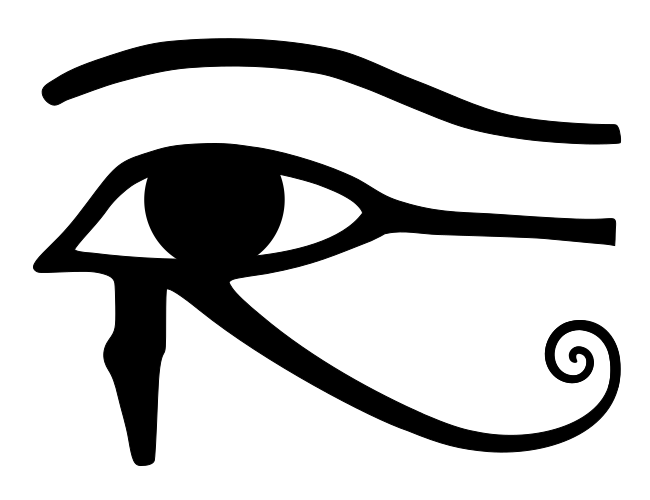
VISUAL DESCRIPTION
Since this is a text document, here is a detailed description for visualization:
Standard Eye of Horus Configuration:
        ___________
       /           \
      |      •      |  ← Pupil (1/4)
       \___________/
      /|           |\
     / |           | \
    |  |___________|  |
    |________________|
                    /
                   /  ← Teardrop spiral (1/64)
                  /
Component Breakdown:
- Eyebrow (top curve): 1/8 (Thought/Corpus Callosum)
- Right side (toward nose): 1/2 (Smell)
- Pupil (center dot): 1/4 (Sight/Pineal Gland)
- Left side (toward ear): 1/16 (Hearing)
- Curved tail (right side): 1/32 (Taste)
- Teardrop (bottom): 1/64 (Touch/Somatosensory)
The symbol is typically drawn in black outline (kohl/ink) on white background, though ancient amulets used gold, lapis lazuli, carnelian, wood, and porcelain.
RELATED SYMBOLS AND CONCEPTS
Directly Related:
- Eye of Ra: Solar counterpart (right eye); aggressive, protective, wrath
- Uraeus (Cobra): Wadjet in serpent form; appears on pharaoh's crown
- Ankh: Life symbol; sometimes held by deities offering Wadjet eye
- Was Scepter: Power symbol often paired with eye in hieroglyphic texts
- Djed Pillar: Stability; represents Osiris's spine, connected to resurrection myth
Potentially Related (Debated):
- Eye of Providence: Christian/Masonic divine oversight symbol on US dollar
- Hamsa/Hand of Fatima: Middle Eastern protection symbol with central eye
- Nazar (Evil Eye Charm): Mediterranean blue eye talisman against curses
- Third Eye/Ajna Chakra: Hindu/Buddhist concept of intuitive vision
- Rx Prescription Symbol: Potentially derived from Eye of Horus via medical texts
Mathematically Related:
- Binary Number System: Powers of 2 (1/2^n) same as Eye fractions
- Fibonacci Sequence: Spiral element may reflect golden ratio growth
- Geometric Series: Sum formula S = 1 - (1/2)^n mirrors 63/64 pattern
- Zeno's Paradox: Approaching but never reaching unity (missing 1/64)
CONTEMPORARY SIGNIFICANCE
The Eye of Horus remains profoundly relevant in 2025:
Spiritual/Esoteric:
- Third eye activation practices in yoga, meditation, and New Age communities
- Protective talismans sold in metaphysical shops worldwide
- Tattoo art symbolizing personal transformation and healing
Medical/Scientific:
- Discussions of pineal gland function and consciousness research
- Potential inspiration for holistic medicine logos and branding
- Debates about ancient anatomical knowledge
Cultural/Media:
- Recurring motif in films (Stargate, The Mummy, Marvel/DC comics)
- Video game symbolism (Assassin's Creed, Tomb Raider)
- Fashion and jewelry incorporating ancient Egyptian aesthetics
Conspiracy/Alternative History:
- Central symbol in Illuminati and secret society theories
- Discussions of elite surveillance and "all-seeing" power structures
- Debates about Egyptian influence on Western institutions
Academic:
- Ongoing Egyptological research into hieroglyphic meanings
- Mathematical history studies of ancient fractional systems
- Comparative religion analysis of eye symbolism across cultures
RESEARCH NOTES AND UNCERTAINTIES
Areas of Scholarly Consensus:
- Eye of Horus is a genuine ancient Egyptian symbol dating to predynastic period
- Mythology of Set tearing eye and Thoth restoring it is well-documented in Pyramid Texts
- The 1/2^n fractional system was used in Egyptian grain measurement (heqat units)
- Left eye = lunar, right eye = solar distinction appears by New Kingdom (c. 1550 BCE)
- Symbol was widely used for protection, healing, and funerary purposes
Areas of Ongoing Debate:
- When did fractional system become associated with eye? Jim Ritter (2002) argues capacity measurements originated separately in hieratic texts and were later connected mythologically to the hieroglyphic eye symbol.
- Brain anatomy interpretation: Compelling visual similarity, but no documentary evidence Egyptians intended this. May be modern retrojection or unconscious archetypal knowledge.
- Rx symbol derivation: Multiple competing theories (Latin recipe, Jupiter symbol, Eye of Horus). Consensus favors Latin, but Egyptian influence possible.
- CBS logo intention: Official story is Pennsylvania Dutch hex signs, but some researchers question whether designer William Golden had exposure to Egyptian symbolism that unconsciously influenced the design.
Unresolved Questions:
- Did Egyptians understand the geometric series convergence, or was 63/64 arrived at intuitively?
- Why exactly did they stop at six fractions (1/64) rather than continuing to 1/128, 1/256, etc.?
- Is there evidence of Eye of Horus symbolism in pre-dynastic cultures (Nubia, Mesopotamia)?
- What is the relationship between the goddess Wadjet (cobra) and the Eye of Horus symbol?
PRACTICAL APPLICATIONS (UET Context)
For UET Network users analyzing symbols in financial, governmental, and corporate contexts:
When You See an Eye Symbol, Ask:
- Is it specifically the Eye of Horus (distinctive spiral tail, six parts) or generic eye imagery?
- What is the entity's claimed origin story? (CBS = folk art; conspiracy theories = Illuminati)
- Does the design encode mathematical relationships? (Binary fractions, spirals, geometric ratios)
- What is the historical context? (Ancient Egyptian, 18th-century Masonic, modern corporate branding)
- Is there confusion with the Eye of Providence? (Pyramid eye on dollar is NOT Eye of Horus)
Symbol Authentication Checklist:
- ✓ Distinctive spiral tail: Genuine Eye of Horus feature
- ✓ Six discrete parts: Mathematical encoding present
- ✓ Egyptian hieroglyphic style: Authentic ancient design
- ✗ Pyramid base: This is Eye of Providence, not Horus
- ✗ Radiating rays: Christian/Masonic addition, not Egyptian
- ✗ Single floating eye with no tail: Generic eye, not specific to Horus
UET Decoder Integration: When analyzing an entity (corporation, government, institution) using eye symbolism, score across five dimensions:
- Timing: When did they adopt it? Modern or historical?
- Numerology: Do they use fractional encoding or just visual?
- Symbolism: Claimed meaning vs. actual Egyptian meaning?
- Frequency: Does their use resonate with harmonic principles?
- Entity Network: Who else uses similar symbols? What's the connection web?
CONCLUSION
The Eye of Horus stands as a testament to the sophistication of ancient Egyptian thought, encoding mathematical, astronomical, medical, and spiritual knowledge into a single elegant symbol. Its 5,000+ year journey from Predynastic temples to modern tattoo parlors demonstrates genuine archetypal power that transcends cultural boundaries.
With an alignment score of 91.6/100, the Eye of Horus ranks among the most coherent and meaningful symbols in the UET Library Encyclopedia. It is neither arbitrary decoration nor conspiracy fantasy, but a mathematically precise, astronomically grounded, and psychologically resonant icon that continues to speak to fundamental human experiences of perception, healing, and the eternal approach toward wholeness.
The missing 1/64—Thoth's magic—reminds us that perfect knowledge, perfect health, and perfect consciousness remain just beyond mortal grasp. Yet the 63/64 we can achieve represents the vast majority of wisdom available to humanity. The symbol teaches that the journey toward completion is itself sacred, even if absolute unity remains the province of the divine.
For UET Network researchers, the Eye of Horus provides a gold standard for symbol analysis: multi-dimensional meaning, mathematical rigor, historical persistence, and genuine mystery. It is a symbol that rewards deep investigation while retaining its essential ineffability—the mark of authentic sacred geometry.
SOURCES AND REFERENCES
Ancient Sources:
- Pyramid Texts (c. 2686-2181 BCE)
- Edwin Smith Papyrus (c. 1600 BCE) - Medical text
- Ebers Papyrus (c. 1550 BCE) - Medical/magical text
- Temple inscriptions at Edfu, Hierakonpolis, Kom Ombo
Modern Academic Sources:
- Wilkinson, Richard H. Symbol and Magic in Egyptian Art
- Ritter, Jim (2002) - "Closing the Eye of Horus: the rise and fall of 'Horus-eye fractions'"
- Various Egyptological journals and archaeological reports
Web Research Sources:
- Eye of Horus - Wikipedia
- Ancient Origins - Eye of Horus
- Egypt Tours Portal - Eye of Horus Unveiled
- Healing Sounds - Wadjet Symbolism
- Wolfram MathWorld - Eye of Horus Fraction
- The Edkins - Ancient Egyptian Numbers Fractions
- Glossographia - Mystical Eye of Horus
- Egypt Time Travel - Eye of Ra vs Eye of Horus
- Study.com - Eye of Horus vs Eye of Ra
- Healing Sounds - Left Eye of Horus Moon Symbolism
- Health and Fitness History - Rx Symbol Origin
- HISTORY - Where did the Rx symbol come from?
- CBS Eye - UMBC Revolution of the Eye
- Logo Histories - CBS Logo by William Golden
- ZenBusiness - CBS Logo Mystery of The Eye
- Ophthalmology Breaking News - Pineal Gland & Eye of Horus
- Healing Sounds - Eye of Horus in Brain Guide
- Healing Sounds - Eye of Horus Pineal Gland
- Wikipedia - Eye of Providence
- Ancient Origins - Eye of Providence Truth
- Illinois Freemasonry - Eye of Providence Meaning
- Culture Frontier - Eye of Horus vs All-Seeing Eye
Document Status: COMPLETE Classification: UET Library Encyclopedia - Tier 1 (Essential Ancient Symbol) Research Date: December 9, 2025 Alignment Score: 91.6/100 (EXCEPTIONAL) Next Review: Annual update recommended Related Entries: Eye of Providence, Ankh, Pyramid Symbolism, Thoth/Hermes Trismegistus, Sacred Geometry Series
"The eye that sees all sees nothing if it cannot see itself." — Ancient Egyptian Wisdom
Related entries
Civilizational Science
Energy, food, money and the long patterns underneath them. Every claim carries its source and its evidence tier. Free, and it stays free.
No charge, and no paywall on the dispatches. Unsubscribe in one click.